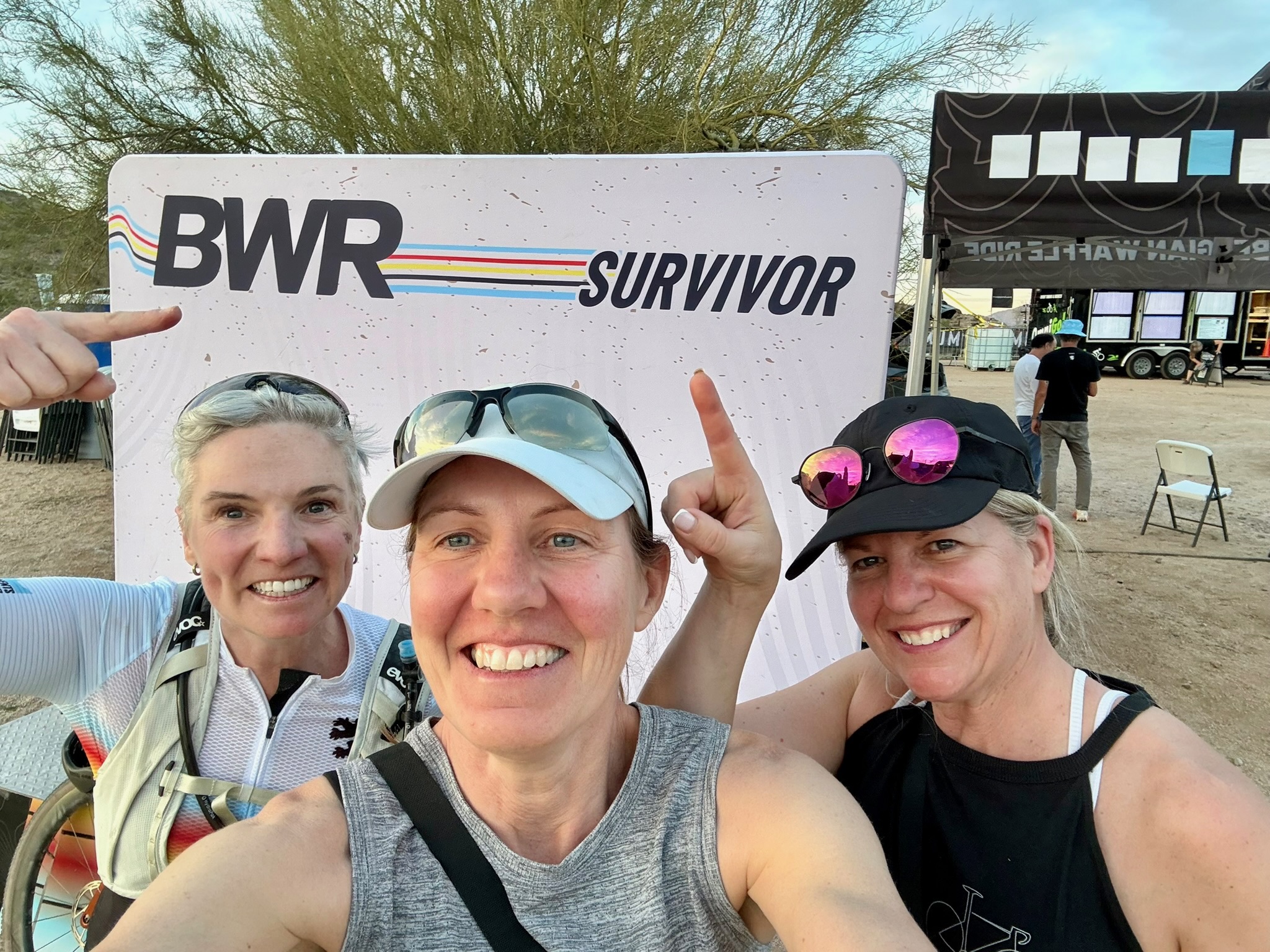
Two cyclists with almost no gravel experience.
One experienced friend who convinced them to sign up.
And one of the toughest gravel races in the world.
That’s how we ended up at the Belgium Waffle Ride (BWR) Arizona.
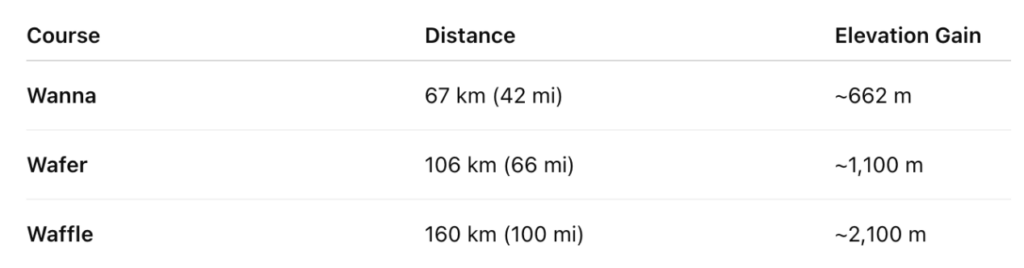
Nicknamed “Hell of the North Desert” and known for brutal terrain, constant surface changes, sand pits, rocky climbs, and technical singletrack, BWR Arizona has a reputation for pushing cyclists far outside their comfort zones. Naturally, that sounded like a great idea… at least according to our friend Marie. We traveled to Arizona to race the event: Krista and I were tackling the Wafer distance, and Marie taking on the full Waffle course.
BWR Arizona 2026: Course Options
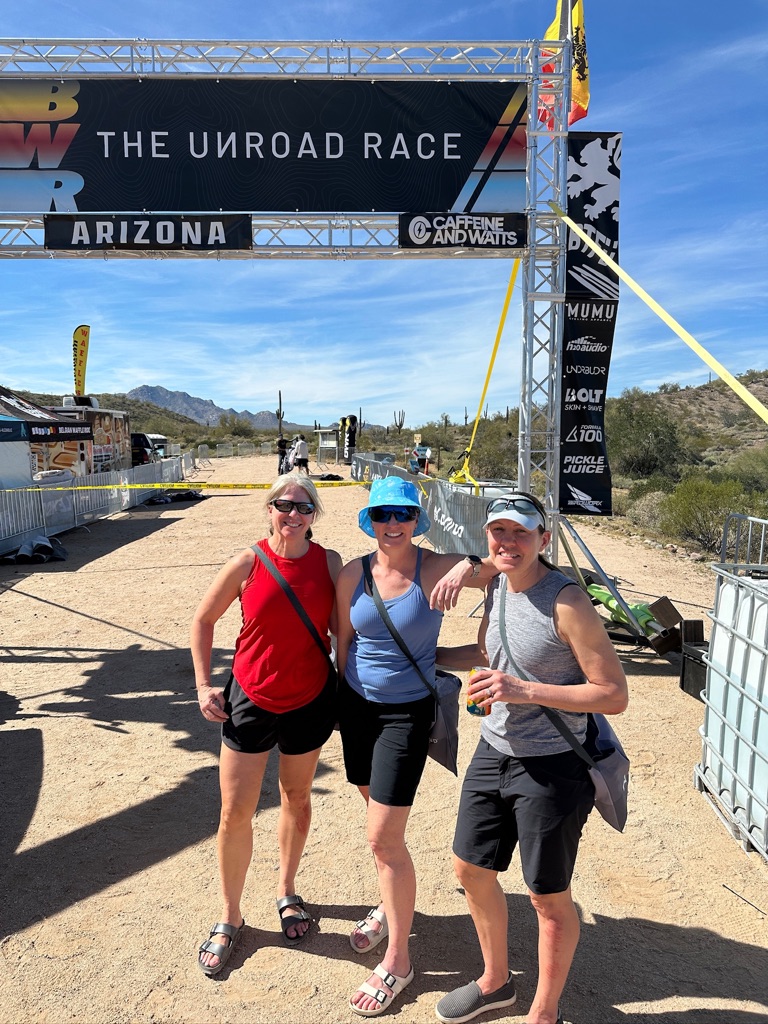
Krista and Mary’s Story
Why We Signed Up
Krista summed up the decision perfectly:
“Honestly, a mix of curiosity and intimidation — and a lot of convincing from our adventurous friend Marie who thought this sounded like a great idea. Gravel seemed gritty and a little wild, and BWR Arizona has such a big reputation. I was drawn to the challenge of doing something outside my comfort zone.”
As endurance athletes used to structured training and predictable race formats, the idea of tackling something less controlled — and far more technical — was both exciting and a little intimidating to both of us. Krista went on to say:
“I’ve spent a lot of time in structured endurance training, and I wanted to test myself in something that felt a little more unpredictable… apparently the logical way to do that was by signing up for one of the toughest gravel events out there. No easing in gently.”
I had similar reasons for signing up. The promise of a new cycling challenge outside my usual comfort zone – along with Marie’s encouragement – made it hard to say no. There was just one small detail I ignored when registering: I didn’t own, and had never ridden a gravel bike. Fortunately, endurance athletes are very good at signing up first and figuring things out later. 😜
How We Were Feeling
Krista described her experience coming into BWR Arizona this way:
“ I don’t have a mountain biking background, and my gravel experience before this was minimal — mostly a few local dirt roads and mixed-terrain rides where I felt brave if nothing unexpected happened.”
She went into the event confident in her endurance and fitness but realistic about the skills the course might demand:
“Fitness? Solid. Bike handling in deep sand? Let’s call it developing.”
Our goal was simple: stay calm, adapt to whatever the course threw at us, and treat the day as an adventure rather than a perfectly executed race.
My own preparation was slightly unconventional. Marie lent me her cyclocross bike and reassured me that riding clipped in on eggbeater pedals for the first time would be easy enough to figure out. I trusted her, and she was right. We all arrived in Phoenix a few days early to get used to the terrain and ride sections of the course. Day one was encouraging. The trails were scenic and flowy, and the terrain felt manageable. Day Two was a Different Story!
The learning curve for Krista and me suddenly got very steep!
We joined our fearless leader Marie, and attempted a tougher section of the Waffle course. After a 10 km climb on asphalt in the heat of the day, we turned onto steep, sandy, rutted terrain that humbled Krista and me almost immediately. This 27 km ride — with roughly 700 metres of elevation gain — took us over three hours to complete and left us questioning our decision to sign up for the race. With some damage to our arms, legs and pride, Krista and I were happy to make it back to the car.
We were thankful the brutal “Northern Loop” we had just ridden wasn’t part of our Wafer course — although Marie would be riding it again on race day. A shorter additional recon ride on day three restored some confidence just in time for the race.
What Surprised Us About The Course
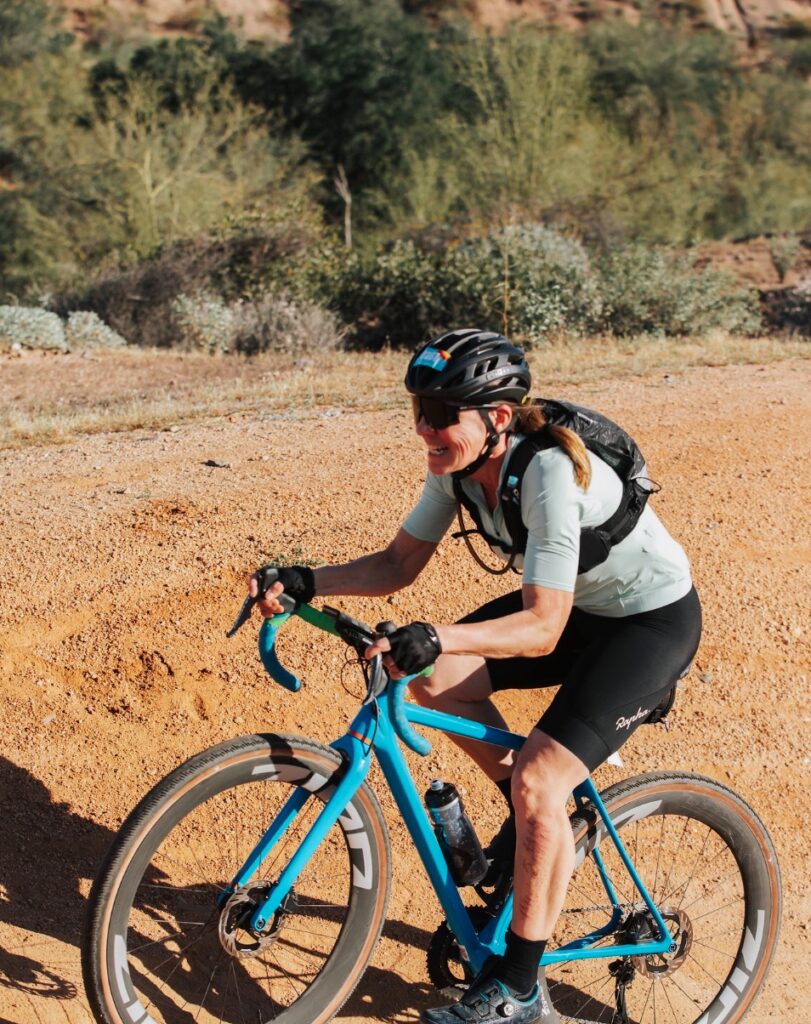
One of the biggest surprises was simply how relentless the terrain felt.
Krista described it well:
“The terrain constantly changes — chunky gravel, sand, punchy climbs — just when you think you’ve settled in.”
The course demanded constant attention. She continued:
“It’s incredibly engaging mentally. There’s no zoning out like on steady pavement; you’re always reading the terrain and making micro-adjustments. It’s like solving a moving puzzle… while your heart rate is at threshold.”
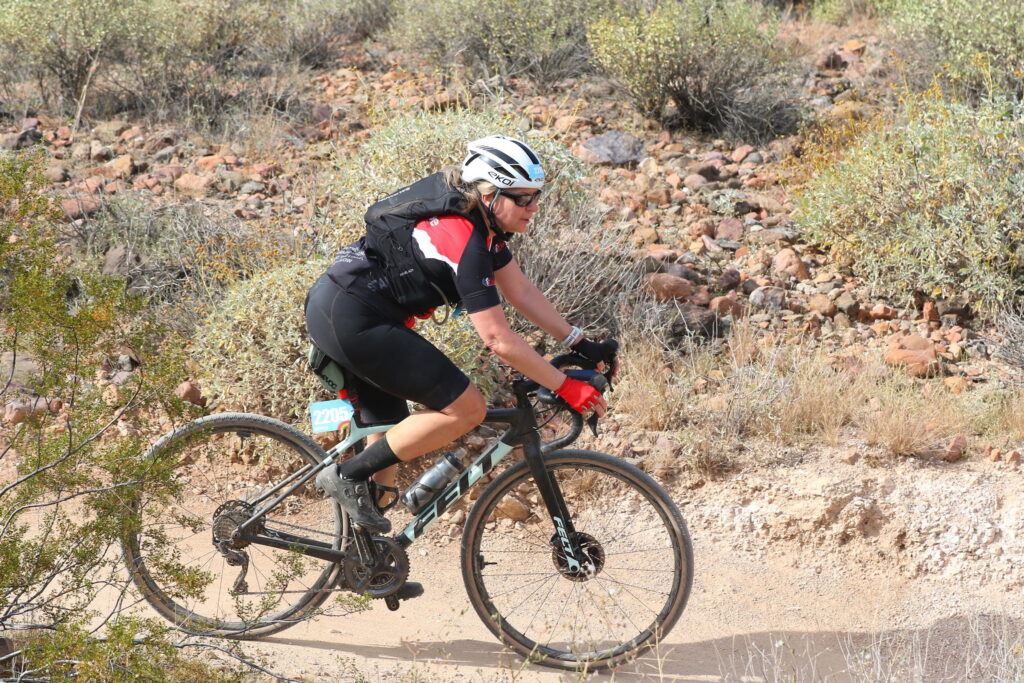
I was surprised by the amount of technical riding — especially off-camber singletrack sections that would feel challenging for me even on a mountain bike. Riding that terrain on a cross bike, clipped in and on smaller tires, required an extra level of focus.
The Toughest Moments
Every endurance race has moments where things feel difficult. For Krista, the hardest sections were rocky singletrack where hesitation could quickly lead to trouble.
“There’s a split second where you either commit or hesitate — and hesitation rarely works in rocky single track. Staying relaxed when instincts suggested tensing up — or unclipping early — was often the biggest challenge. I may or may not have had a few internal pep talks that sounded suspiciously like, ‘You paid for this. Keep pedalling.”
For me, the toughest moment came just past the halfway point of the race. The temperature had climbed to around 32°C, and I hit a stretch of technical singletrack before the second aid station. I had run out of water and felt like I was baking under the desert sun while slowly navigating punchy, rocky climbs and super cautious sandy/rocky descents. These final km’s before the last aid station seemed never-ending.
Physically it was challenging, but mentally it was even harder. The amount of sustained focus required throughout the race created a level of mental fatigue I hadn’t experienced before on the bike.
Best Moments Of The Day
Despite the challenges — or maybe because of them — finishing the race felt incredibly satisfying for both of us. Krista captured it perfectly:
“Crossing the finish line knowing I stepped into something new and did it — even if it wasn’t always pretty was an amazing feeling. There’s something incredibly satisfying about surviving… I mean, completing… a race that stretches you.”
The atmosphere was very memorable too:
“There’s competition, but there’s also shared suffering, encouragement, and the unspoken understanding that we all just wrestled the same sand pits.”
Marie’s Story
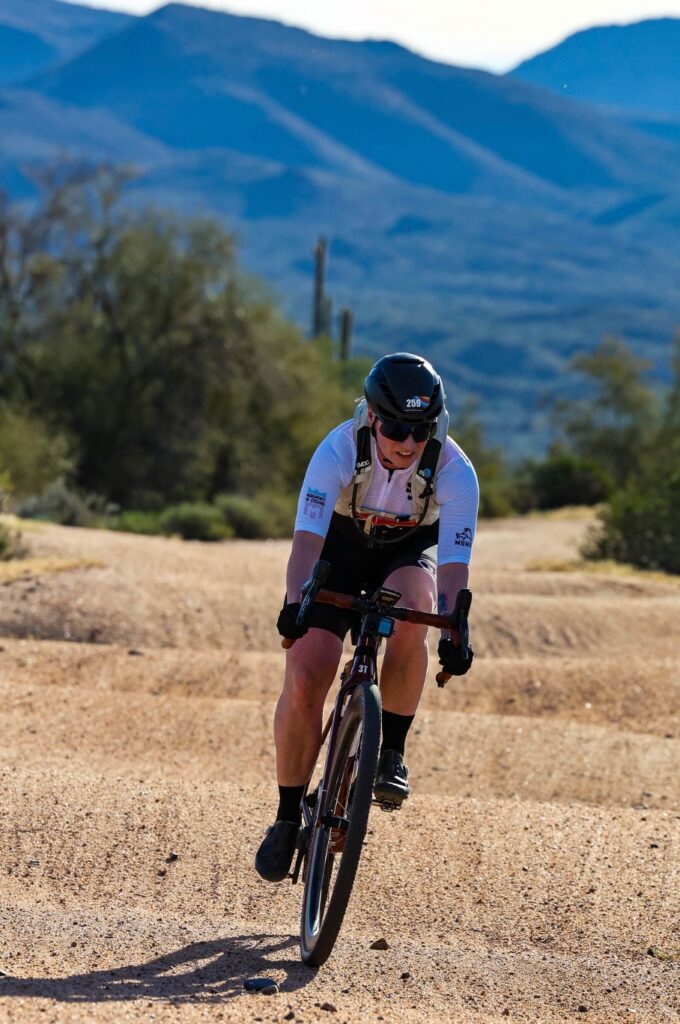
While Krista and I were riding the Wafer, Marie was tackling the Waffle.
At 160 km with over 2,000 meters of climbing, the Waffle course adds another level of challenge to an already demanding event. Marie enjoys events that combine different cycling skills and had raced another BWR event before. She mentioned:
“I’m always looking for a new challenge that forces me to improve my bike handling, weather tolerance, distance pacing, or some other aspect that makes the event unique.”
What Surprised Marie About the Course
Even with experience, the course delivered plenty of surprises.
“The amount of sand we rode and then the relentless rocky sections that were obviously ATV trail were a bit surprising.”
BWR is famous for constantly changing terrain, and the Waffle course amplifies that experience over a much longer distance. Marie’s toughest moment came deep into the race:
“At about km 140 my inner thighs were starting to cramp on both legs along with my quads… nothing to do but stop and wait for the cramps to stop knowing the clock was ticking for the finish cut off.”
Best Moment of the Day
Despite the challenges, the day delivered some unforgettable moments for Marie:
“Other than ripping the fast flowy smooth descents in McDowell Park… getting to the final aid station and having two amazing friends waiting to be my personal pit crew.”
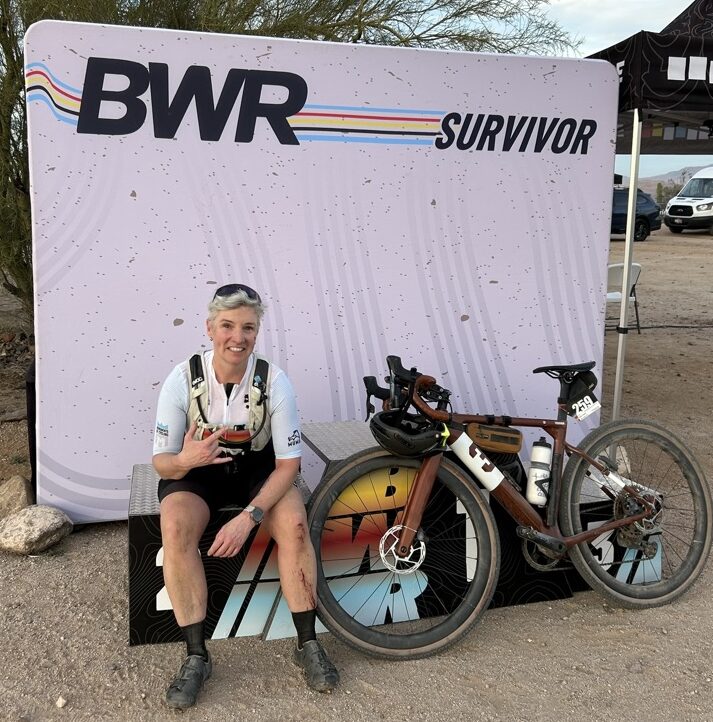
Filling bottles, grabbing nutrition, and sending Marie off from that final aid station was one of the highlights of the day for Krista and me as well. Marie had already covered the hardest parts of the course, had about 40 km left to ride, and she was still smiling. Marie finished the Waffle course under the 10-hour cutoff on a brutally hot day — one of only eight non-professional women to complete the race.
Watching her finish, Krista and I shared the same thoughts: Marie is a total badass and we were both glad we had said “yes”.
Thinking About Signing Up for a Gravel Race?
All three of us have similar advice for triathletes curious about gravel racing.
Krista’s perspective:
“Do it. Your fitness absolutely translates — but leave your expectations at home. Gravel rewards adaptability over perfection.”
From my experience, practice makes a huge difference. Even the terrifying experience of riding the Northern Loop on day two served a purpose. It was a benchmark for what is “too hard”. On race day, when things got spicy, I kept saying to myself, “this is way easier than what you’ve done – stay focused and keep pedaling.”
Marie takes preparation even further:
“Practice riding rough singletrack. Practice long climbs in the dirt. Practice riding in the heat of the day. Practice trying to eat and drink while riding washboard. Don’t be afraid to try something that scares you a bit. Dip your toes into something that makes you uncomfortable. It’s the fastest way to grow as an athlete.”
For triathletes looking for a new challenge, gravel racing offers exactly that — a mix of endurance, skill, and adaptability that keeps you fully engaged from start to finish.
And if you happen to start with an event like the BWR Arizona?
You’ll come away with a story to tell.