A year ago, I started my “heavy lifting” journey at Optimum Performance Training. I went from learning how to squat, hinge, press and pull properly…to doing it all under real load.
Then I saw that HYROX was coming to Vancouver. Could a seasoned 70.3 athlete with a year of strength training hold their own in a functional fitness race? I was curious about the HYROX hype and wanted a winter challenge. If I’m honest, I worried I’d look like a poser and possibly be too old to “fit in”. But, it’s good to do things that scare you a bit, so I decided to give it a go!


Why doubles made sense
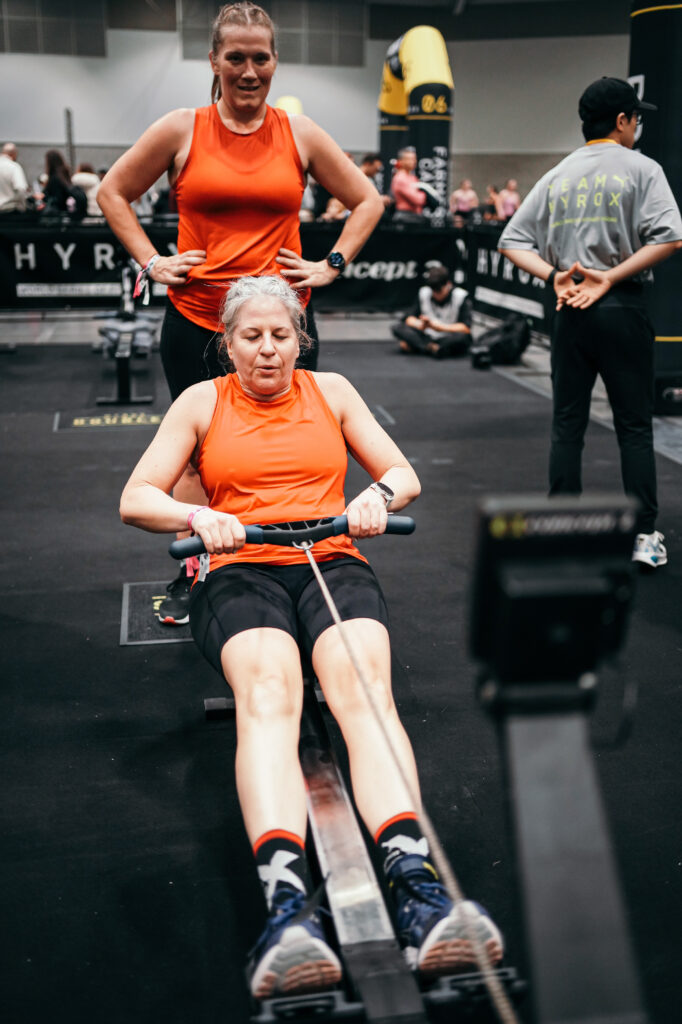
I enlisted LYNX club member and Learn to Lift teammate, Kim, to race the Doubles Women Division with me. I firmly believe in fun fitness — and racing with a partner is ALWAYS more fun.
In Doubles:
- You run all 8 x 1km segments together
- You split the work at each station however you choose
Kim is strong. We run at similar paces and she’s always up for an adventure. I knew she would be the perfect teammate and was very happy she agreed to partner up for this challenge.
We treated the event as both a reconnaissance mission and goal race. We wanted to see what HYROX had to offer and how we’d stack up. We crossed the finish line under our goal time of 1 hour 30 minutes earning 15/44 in our age group.
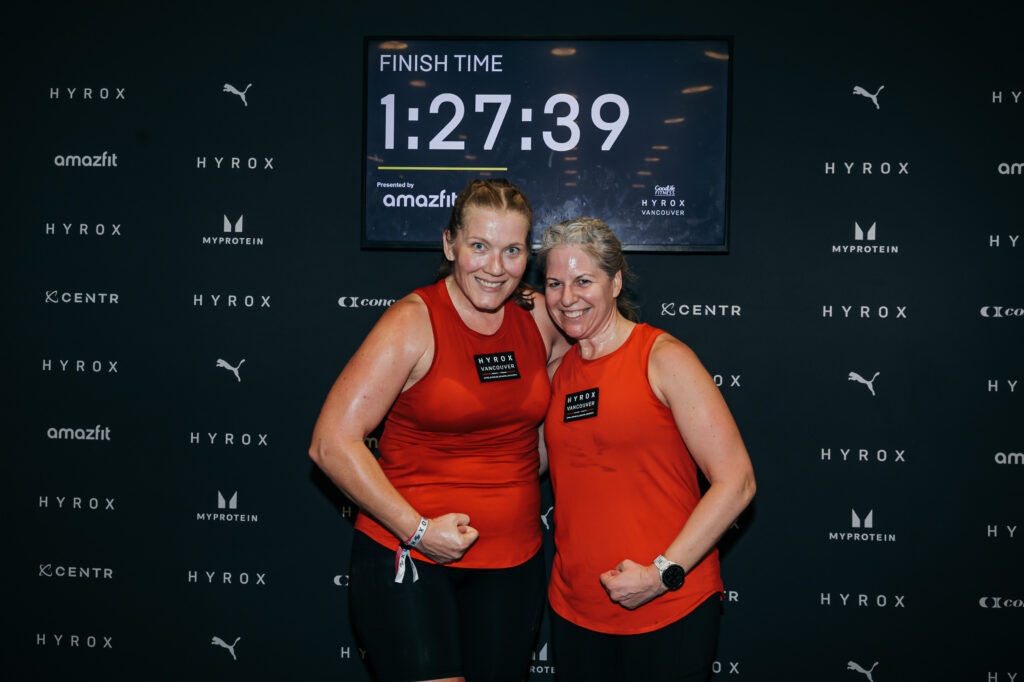
Age divisions are in five-year increments where a doubles team age is the average age of team members on race day. At 49.5, Kim and I just missed being in the 50-54 age group. It was interesting to see that the number of participants in the 50-54 age group dropped by a little more than 50% (only 19 teams) compared to 44 teams in our age group. At this event, 787 women’s doubles teams were younger than us and only 31 were older! We weren’t imagining it – we were among the oldest athletes in the event. 😜
The run intervals: familiar territory with a twist
HYROX consists of 8 x 1km runs, broken up by 8 functional movement stations.
We were very calculated with pacing. Our runs felt like tempo — somewhere between 10K and half marathon pace. Controlled enough to allow heart rate recovery after hard stations. And that was key. After particularly taxing efforts (sled push, sled pull, BBJ, lunges), we deliberately walked the Roxzone transitions before starting the next km run. This strategy allowed us to recover and stay consistent.
Even though we were familiar with each HYROX station, we completed six race-specific training sessions with Coach Kat leading up to the event. She made sure we understood every rule (there are a lot), and drilled technique, pacing, and transitions under fatigue. The preparation really paid off. ✅
The stations: we knew them all, but three stood out
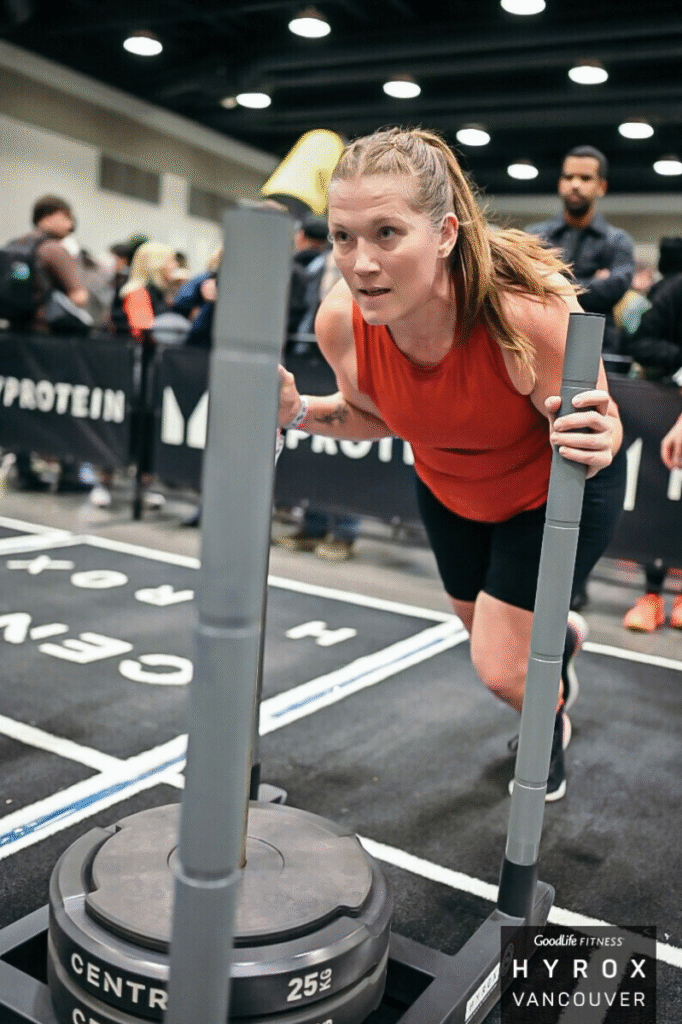
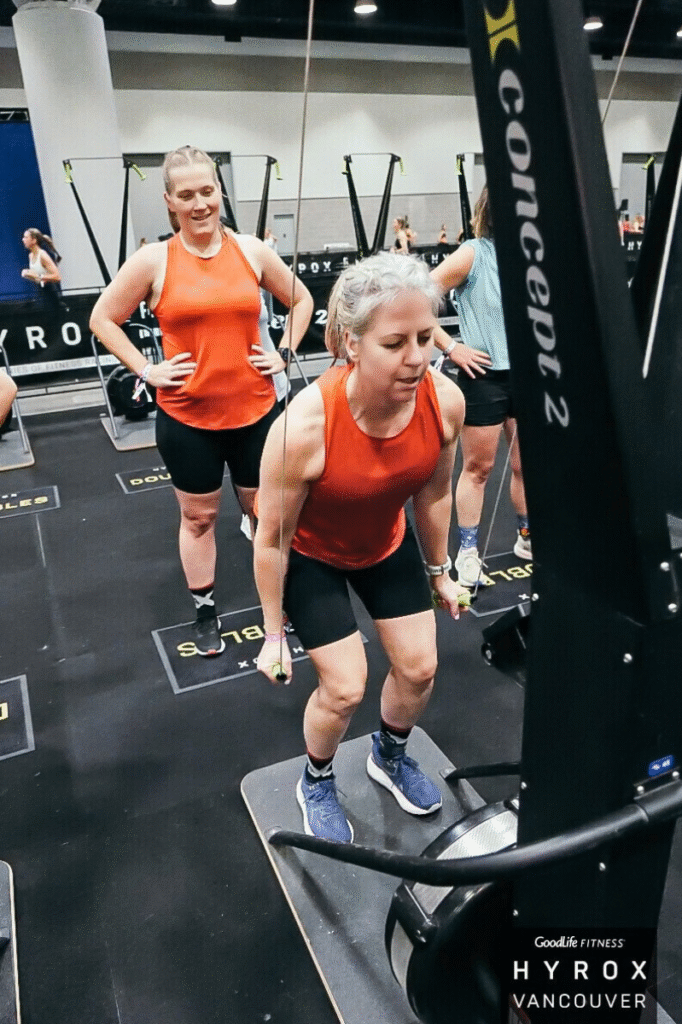
Sled Pull: We had practiced at race weight (sometimes heavier) — but the event flooring created WAY more friction. The sled felt dramatically heavier. Kim did the lion’s share of this station for us. I was…moral support.
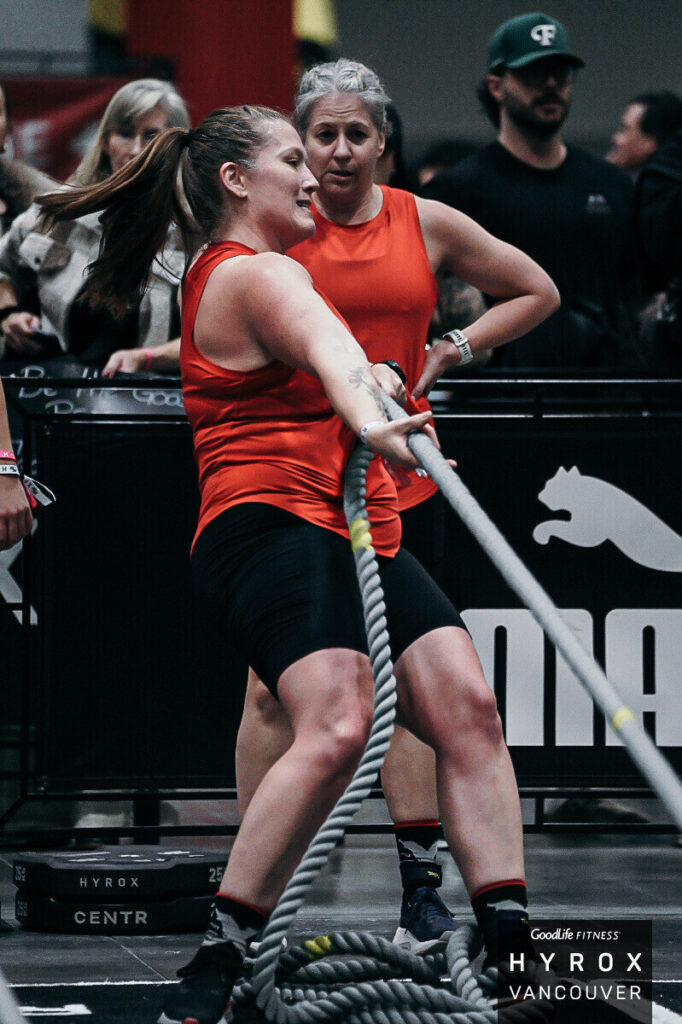
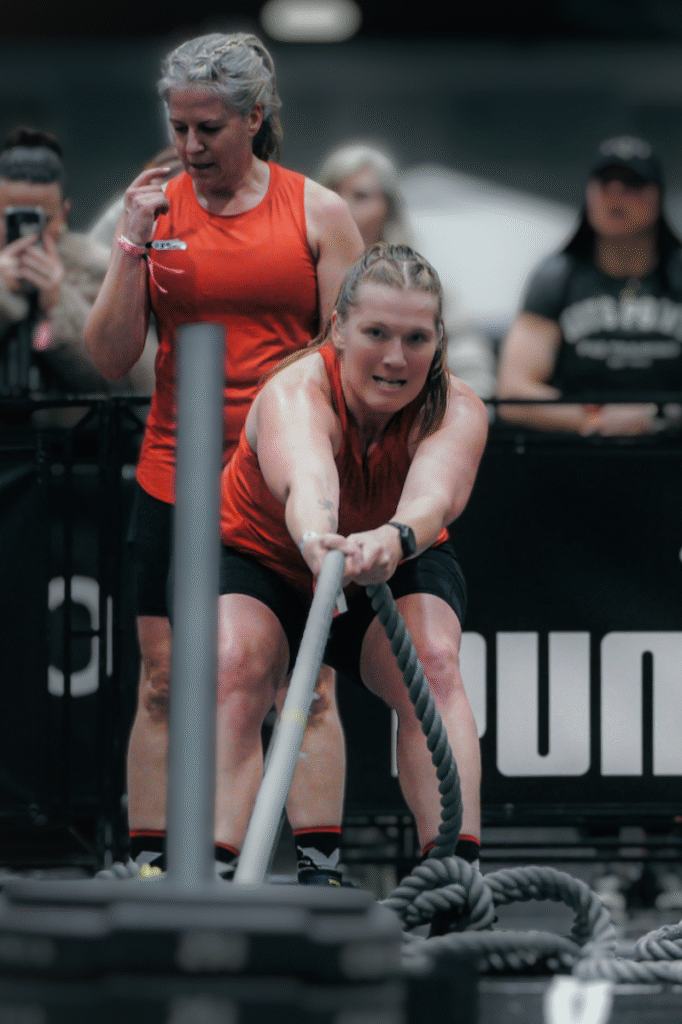
Burpee Broad Jumps: this station demands pacing! I took longer “shifts” to repay Kim for carrying us on the prior sled push and pull stations. I needed to unload some guilt for making her work so hard!
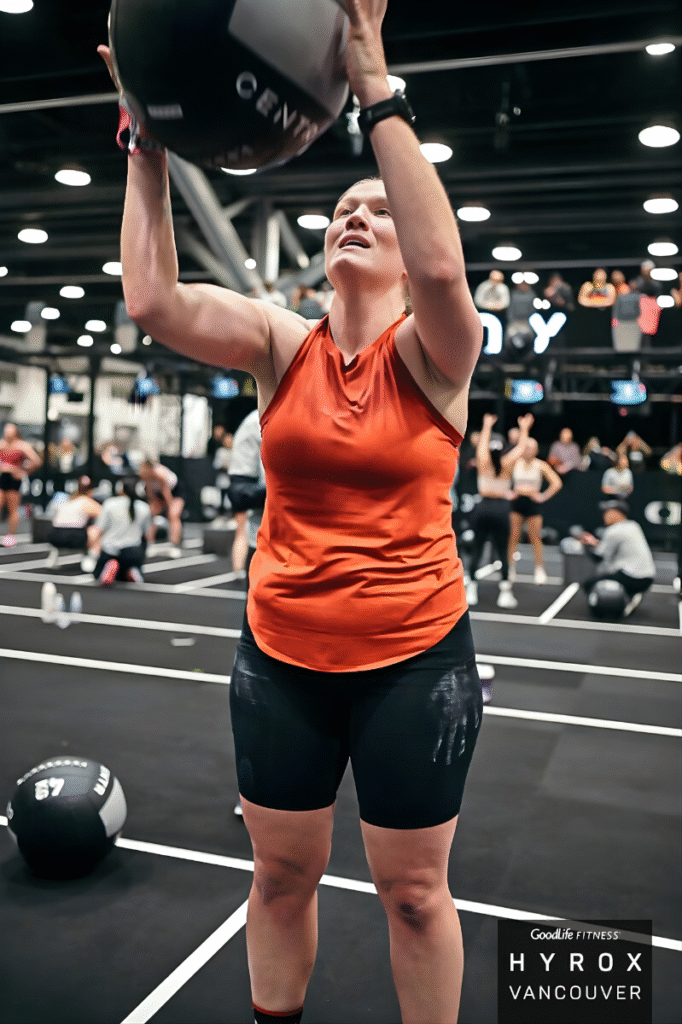
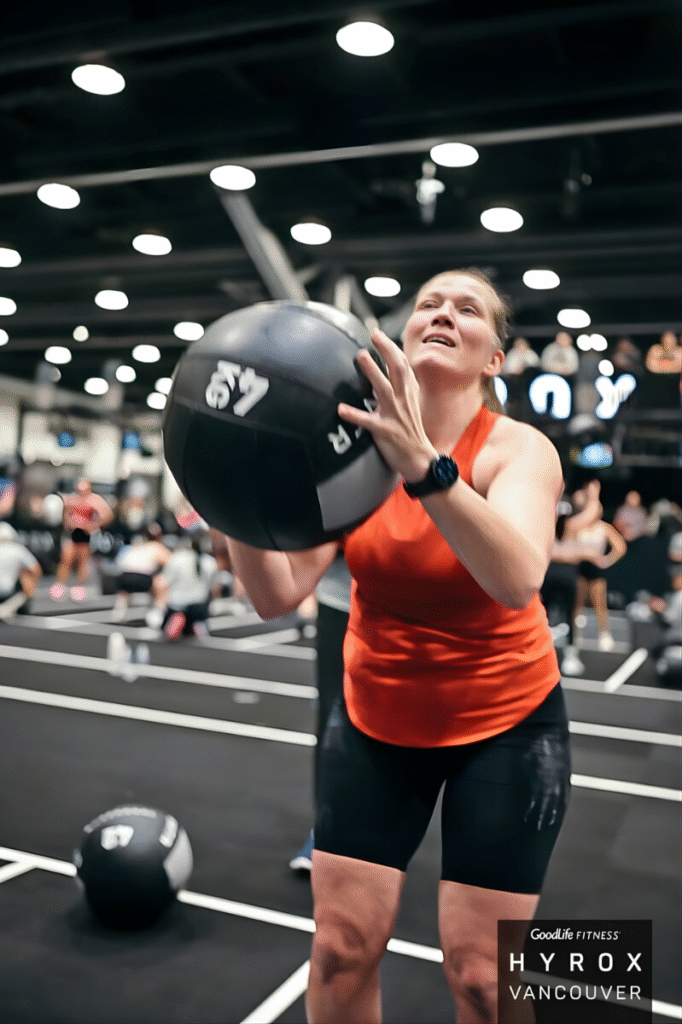
Wall Balls: we knew these would be tough, but, we grossly underestimated exactly how challenging this station would be. One hundred reps of anything is daunting — especially wall balls as the final station. At the event, judges were laser-focused on squat depth – hips BELOW knees. After 80 minutes of work, this standard hit hard! I was having to do 15 reps to get 10 counted. Kim was channelling Snoop Dogg’s poetic words “drop it like it’s hot” in order to practically kiss the ground with her tush during her squats. It wasn’t pretty, but we got it done! 😵💫
Strength vs engine: which matters more?
Strength matters — especially for the sled work — but our aerobic fitness carried us through the event.
Compared to triathlon:
- More anaerobic than a 70.3
- Similar intensity to a sprint triathlon
- Constant muscular fatigue layered on top of cardio effort
Pacing: the triathlete advantage
We didn’t go out too hard. That was one of our biggest wins. Fatigue accumulated steadily from the start, but we were consistent. By the 8th run, we were thrilled it was the last — but, still hanging in there. If we race again, I’d push slightly harder on a few of the stations (ski, row, & lunges) knowing how much recovery the 1km runs allow.
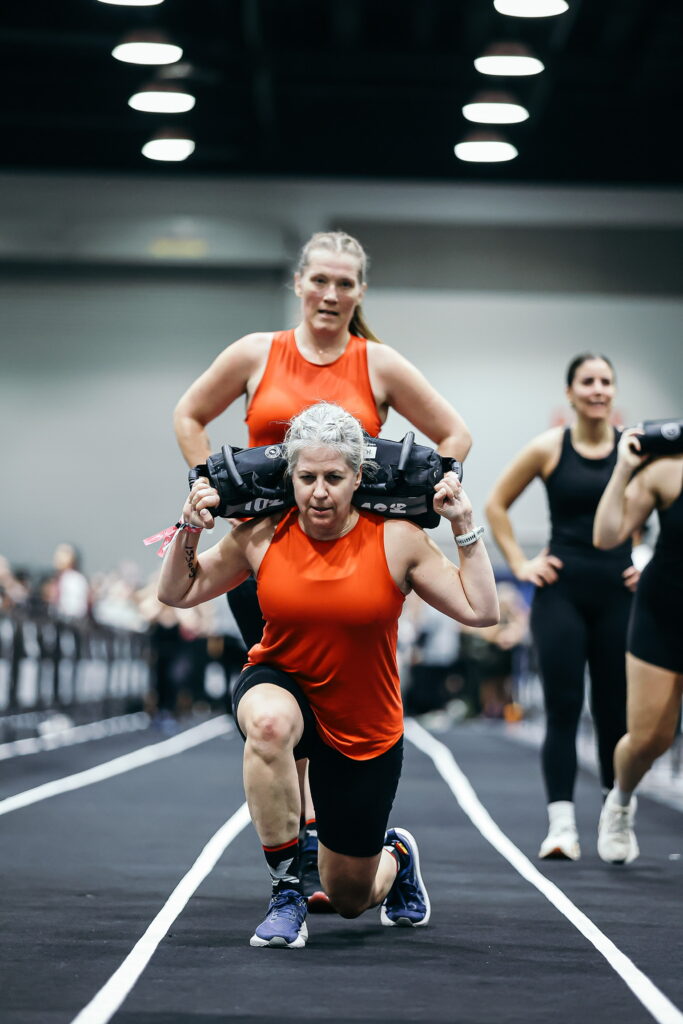
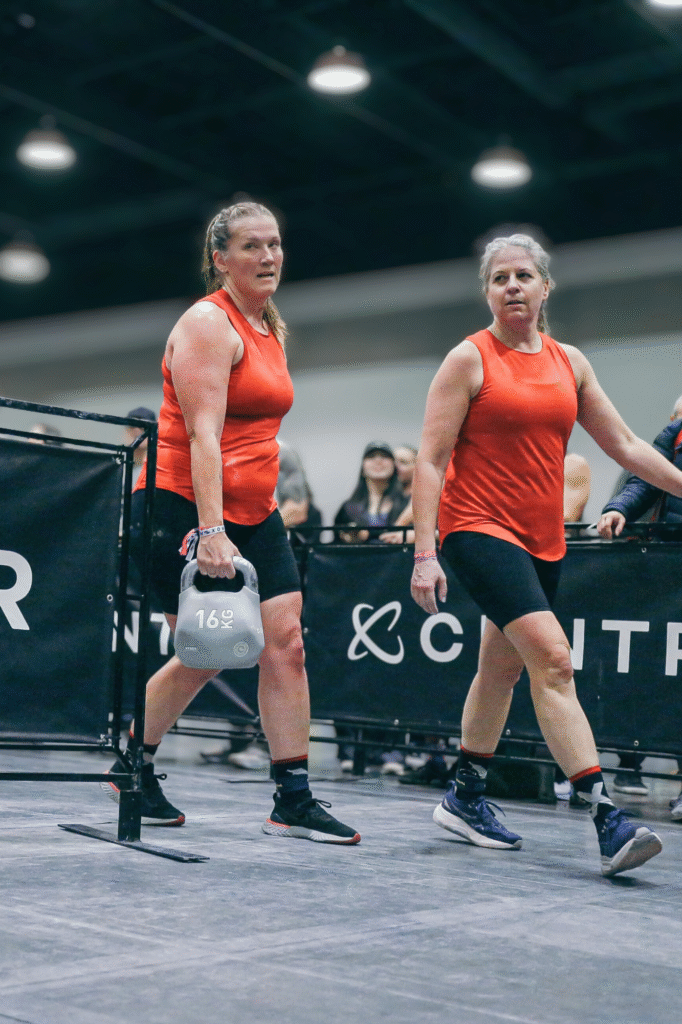
Kim’s only pacing regret? “I should have run the farmer’s carry. We could have finished that station faster.”
The atmosphere
Three words: Empowering. Energetic. Fun.
The demographic skewed younger. We joked about being in the “geriatric category,” but we held our own — and that confidence came from how we train for triathlon. The HYROX vibe is amazing! It’s loud, supportive, and inclusive. The event was incredibly organized and executed with precision. There were close to 8,000 athletes (~500 Pros, 7,500 Amateurs) who competed over the 2 day event.
Was it intimidating seeing so many muscular humans in one place? A little. Did we belong? Absolutely!
Recovery
Stairs that evening were noticeable. My knees were tender the next day – sandbag lunges and deep wall ball squats the likely culprits. Kim’s arms and upper body felt the sled pull! But honestly – no worse than post-triathlon soreness. With Christmas days later, we took time off but we easily could have returned to triathlon training quickly.
Thank you Kat!
A huge thank you to Coach Kat for preparing us so thoroughly. From sled pull strategy to transition practice to race-day pacing and nutrition conversations, her attention to detail gave us confidence walking onto that floor. It’s one thing to be fit and another to be prepared. We were both. 😊
Honest takeaways for triathletes
Who should try HYROX?
- Anyone comfortable running 10k
- Anyone familiar with functional strength movements
- Anyone looking for off-season variety
Who might not enjoy it?
- Athletes very new to strength work
- Anyone attempting solo without adequate preparation
Is it good for triathletes?
- Absolutely. Off-season ideally but could be done concurrently with triathlon training
If you’re a triathlete wondering whether your engine transfers, it does! Just make sure you practice getting your hips below your knees when squatting. And remember, HYROX is more fun with a partner! ~ Coach Mary
5 Tips for Triathletes Considering HYROX 💥
- Train compromised running
Run 1km after heavy sled pushes, lunges, or burpees. HYROX isn’t about fresh legs — it’s about running on tired ones. - Go heavier in training than you think you need
Race-day friction on sleds can make familiar weights feel much harder. Build a margin. - Respect pacing — but don’t fear the run
As triathletes, your aerobic engine is an advantage. Use the 1km runs to recover and reset, not panic. - Dial in your squat depth
“Parallel” isn’t always enough. Practice true hips-below-knees wall balls under fatigue — and get comfortable being judged on every rep. - Practice partner strategy (if racing Doubles).
Know who owns which station. Decide in advance when to switch. Strategy saves time.