Pat is a longtime endurance athlete and LYNX swimmer. In August 2026, he travelled to Singapore to compete in the World Outrigger Sprint Canoe Championships. He wrote this piece about his years in paddling and his experience at Worlds.
“I am a lucky senior with few physical ailments that prevent me from competing in age-class sports like triathlon, paddling and cross-country skiing. One advantage is that every five or ten years, you enter a new age class and suddenly feel competitive again. Yes, I know—a bit of convenient deception.
This past summer, my focus was outrigger sprint canoe racing. You might have seen the boats in Maui, or on old TV shows like Hawaii Five-O. Canada has a strong canoe and kayak racing tradition, and we’re also a strong competitor in outrigger distance and sprint racing alongside many South Pacific nations.
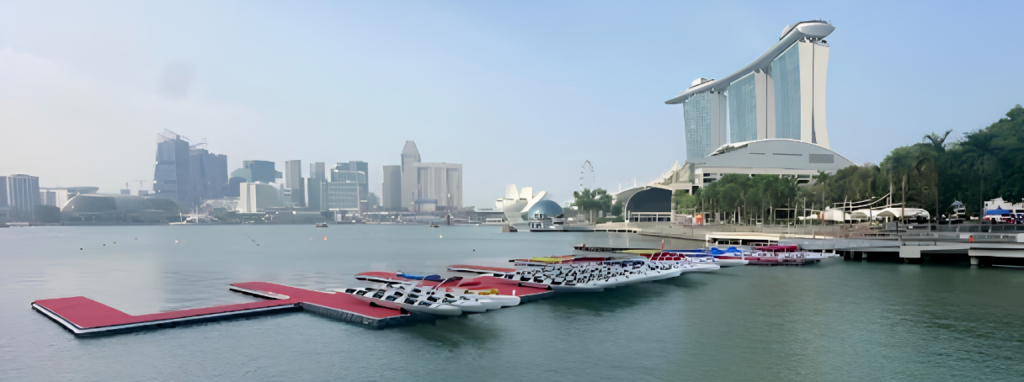
Singapore skyline and the race venue on Marina Bay
How I found my way to outrigger
I grew up about a kilometre from the Rideau Canoe Club in Ottawa and spent much of my youth racing flatwater, or Olympic-style, canoes and kayaks. After engineering school, I moved west, like many of my classmates. Career and family left less time for serious racing in my 30s and 40s.
But this lifelong sport has a way of drawing you back in. The only things that really change are the type of racing craft—and maybe your times! From flatwater and whitewater to ice canoes on the St. Lawrence River, voyageur, marathon, canoe tripping, dragon boat and outrigger, there are plenty of ways to keep the paddling habit alive.
The Calgary Canoe Club is in North Glenmore Park on the Glenmore Reservoir, where it shares a facility with the Calgary Rowing Club. It has had an outrigger division since about 2000, and that division now has roughly 130 members. That may seem a bit odd when you consider that we paddle around in circles on water that’s only a little over 2.5 km wide at its widest point. Most competitive outrigger clubs in Canada are on the West Coast or large lakes.
Outrigger races include singles and six-person boats. At Worlds, there is also a team event with two six-person boats strapped together to make a 12-person craft. Sprint courses are usually a straight 500 m or a 1,000 m race with turns. Distance races can range from a couple of kilometres to 70 or 80 km—for example, a crossing between Hawaiian Islands.
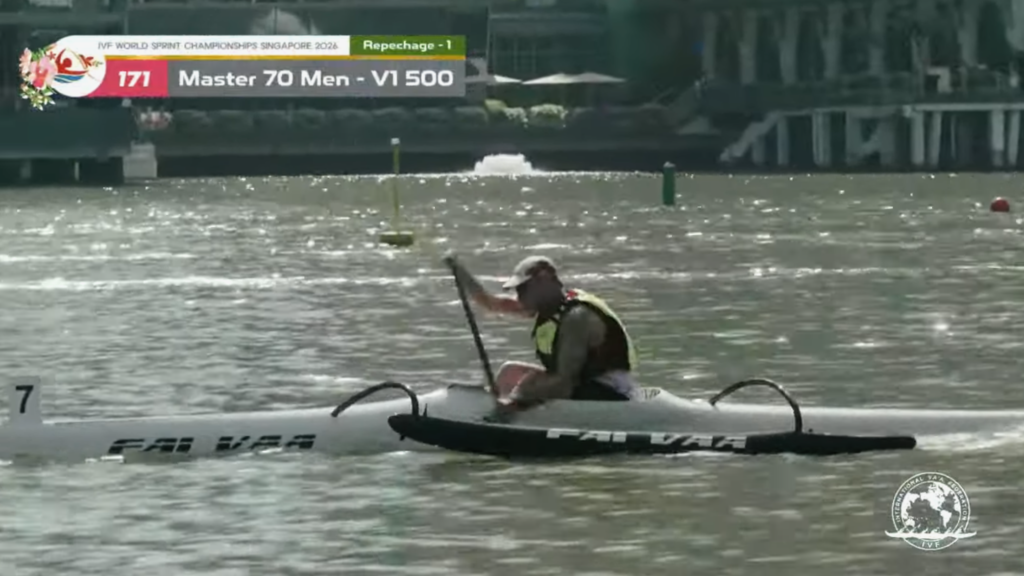
Pat advances to the semi-finals in the 500m V1 repechage
Preparing for Singapore
I had been to five previous World Outrigger Sprint Championships. This year’s event was in Singapore, close to the equator, so we knew to expect heat and humidity. There were about 3,500 competitors across roughly 580 events. We raced on Marina Bay, a body of freshwater right in the centre of the city, surrounded by skyscrapers.
To qualify for a singles entry, you normally need to place in the top three in your age class in your country. I earned my entry at time trials in Calgary in fall 2025. For six-person events, Canada typically gets up to six entries in an age class, which can mean crews have to race off at our trials for a spot at Worlds.
I was lucky to race with a crew of like-minded paddlers aged 70 to 74 from Calgary and BC. Most have been competitors for a long time, and some, like me, since childhood. We had an intense year preparing for Worlds, practising five or six times a week and sometimes twice a day—just what every 70-year-old needs. I think I was lucky to be the youngster in the boat.
One thing some of us, especially former runners, appreciate is the merit of a “sit-down sport” and, fingers crossed, fewer of the injuries we’ve known in other sports.
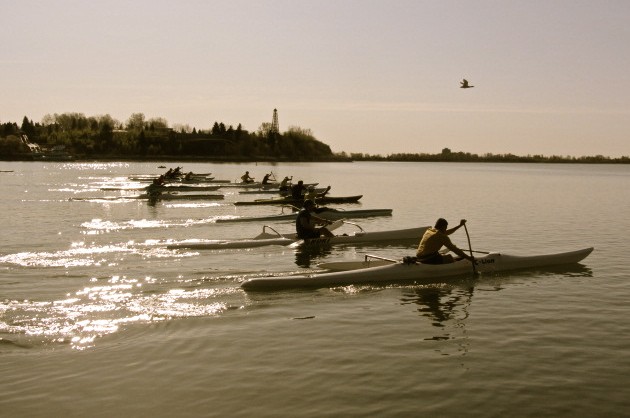
Start of an OC1 race on the Glenmore Reservoir.
Racing at Worlds
Canada fared well, placing fourth overall among 29 countries, behind the perennial favourites from Tahiti, New Zealand and Hawaii. Interestingly, Hawaii competes separately from mainland USA and sings its own anthem.
The championships have events for youth, para-athletes, open and elite competitors, and age classes up to 80-plus. Two Calgarians—longtime competitors and former world champions themselves—placed second and third in the men’s 80-plus singles. Canadian women dominated the 70s classes, and Canadian men earned medals in the 50s, 70s and 80s.
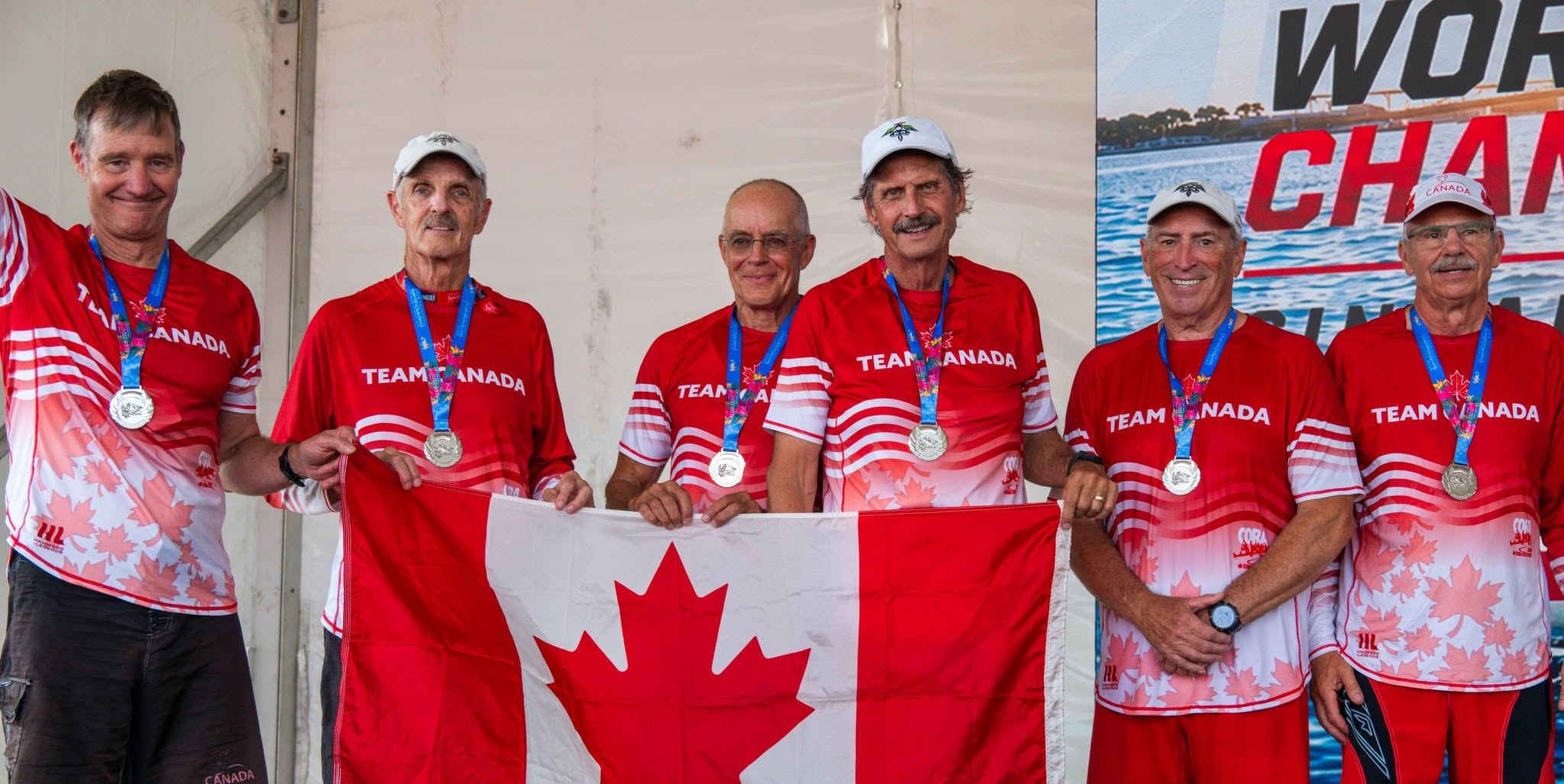
Our Calgary crew took silver in both the 500 m and 1,000 m six-person events. I made the semifinals in my singles race but didn’t advance to the final. I think I may need to move somewhere with 12 months of open water to have a chance of that happening!
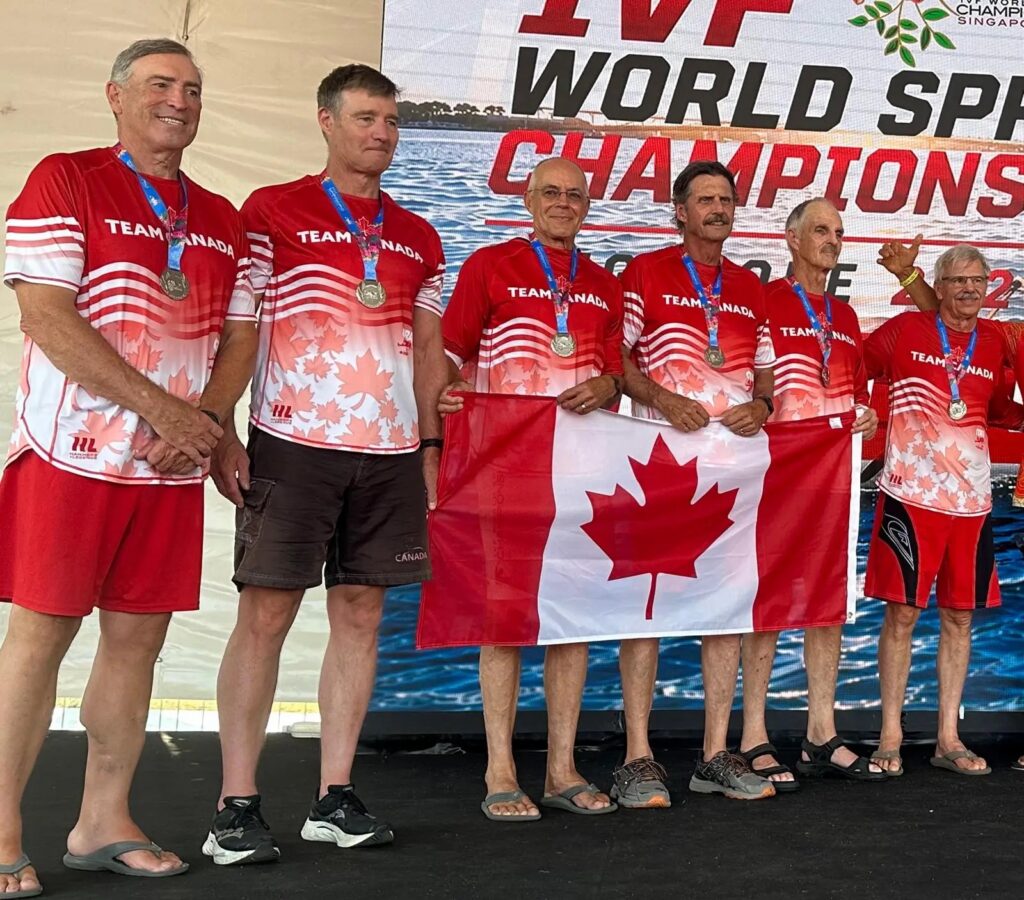
M70 crew with their silver medals for the 1000m turns race
From Singapore to the Fraser River
A couple of weeks after returning from steamy Singapore, our crew went to the Canadian long-distance outrigger championships near Fort Langley on the mighty Fraser River.
It was quite a contrast. Instead of a sprint course in the middle of a city, we faced tides, currents, barges, sandbars and other water hazards over races of 15 to 22 km—with mass starts of up to 30 canoes or so.
Now I’m back in the pool after a long summer absence. Hopefully I can catch up with the others in my lane over the fall and winter, leaving me ready for another paddle season in May. And maybe a triathlon or two.
If you’re interested in the Calgary Canoe Club’s recreational or competitive outrigger programs, visit calgarycanoeclub.com or drop by the clubhouse. There are outrigger, kayak, marathon and recreational canoe options for all tastes. If you have any questions about outrigger paddling, I’m happy to chat—Coach Mary can put us in touch. Paddles up!”
Thank you, Pat, for sharing your story with us.